S.T.O.P.
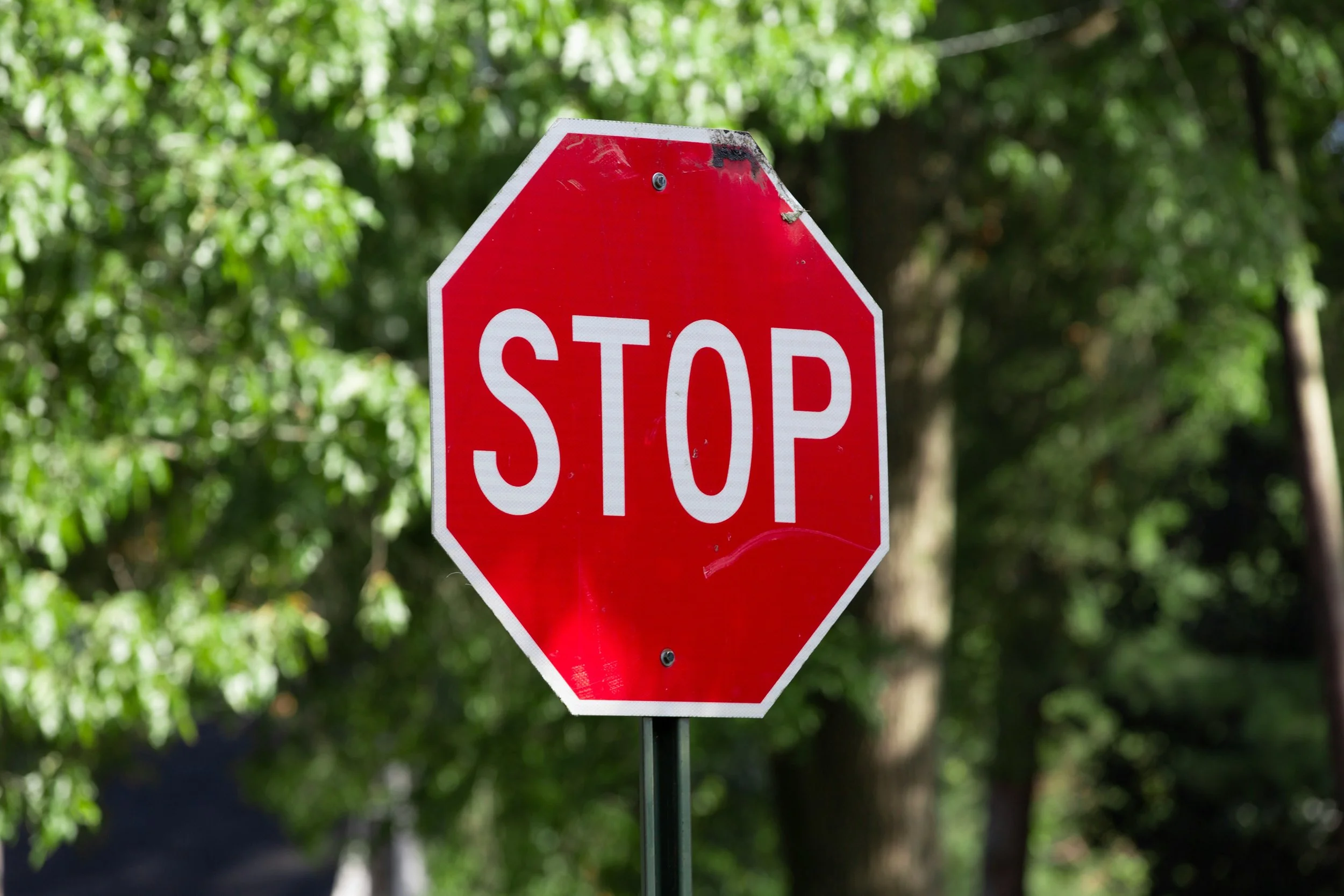
Photo by Will Porada on Unsplash
When was the last time you actually stopped?
I’m not talking about a rolling stop, a gliding stop, a near halt, or a pretend-you-didn’t-see-it stop. I’m talking about a hard stop. No forward movement. The vehicle comes to a complete stop.
What if the vehicle is us? This body vehicle? We must honor the need to stop too. Hopefully on purpose, and not because the body shuts down after we’ve ignored the signals for too long.
We live in a busy, hurry-filled, rush-saturated culture. I live in a mostly retired, mostly over-55 community, and you would think there would be a slowing down – less rush, less hurry. But that’s just not the case.
We’ve even received HOA notices reminding us about the importance of stop signs in our little community. They are safety necessities, both in traffic and in life.
There’s a fable about a man riding swiftly through town on a horse, frantic with urgency. A concerned onlooker, shouts, “Where are you headed in such a hurry?”
The man responds breathlessly, “I don’t know! Ask the horse.”
This is us on most days. Not riding a horse through town but riding the train of our thoughts into the past or the future, regret or fear, depression or anxiety.
Pausing. Stopping. Noticing. Smelling the roses. This is wise advice for regulating our nervous systems.
Fight, flight, freeze, fawn (the sympathetic nervous system) is not meant to run all day every day.
Rest, digest, tend, befriend (the parasympathetic nervous system) is designed to be our default renewal system.
We need both. Yet in our hurry culture, we are chronically in sympathetic overdrive, galloping along on our hurried horse.
An easy antidote comes in the form of an intentional pause. A deliberate stop. A return to the present moment.
This essential 101 mindfulness practice for nervous system regulation is known as S.T.O.P.
Four easy steps to re-regulate, renew, and move through life with greater awareness.
Step 1 – Stop.
The literal hard stop. Gather yourself. Feel your feet. Know where you are.
Step 2 – Take a Breath.
You are always breathing (approximately 20,000 breaths a day) but rarely aware that you are. Breath is the most powerful tool you have. Without it, you wouldn’t be here reading this.
So take one with great awareness.
Breathe in and know you are breathing in.
Breathe out and know you are breathing out.
Feel your feet on the earth. Your body in the chair. Notice your connection to the ground beneath you.
Step 3 – Observe.
What is happening inside you right now?
What are the contents of your thoughts? Not to continue thinking them, but simply to notice what’s there.
What are you feeling? Is there an emotional tone? Name it.
How does the body feel? Any sensations in the jaw, shoulders, neck, forehead, anywhere?
Be with what you notice with curiosity and interest. You don’t have to fix anything, because nothing is broken.
Step 4 – Proceed.
Go forth. Carry on.
But now you move from a spacious strength, filled with presence and awareness.
Consider practicing this whenever life offers a natural pause, like at a stop sign.
Perform a true hard stop. Take five to ten seconds to move through these steps.
Yes, it might piss off the driver behind you, which probably means they could use a STOP practice too ;-)
In-joy the stop,
Debbie