Meditation: The What’s, Why’s and How’s-Part 1
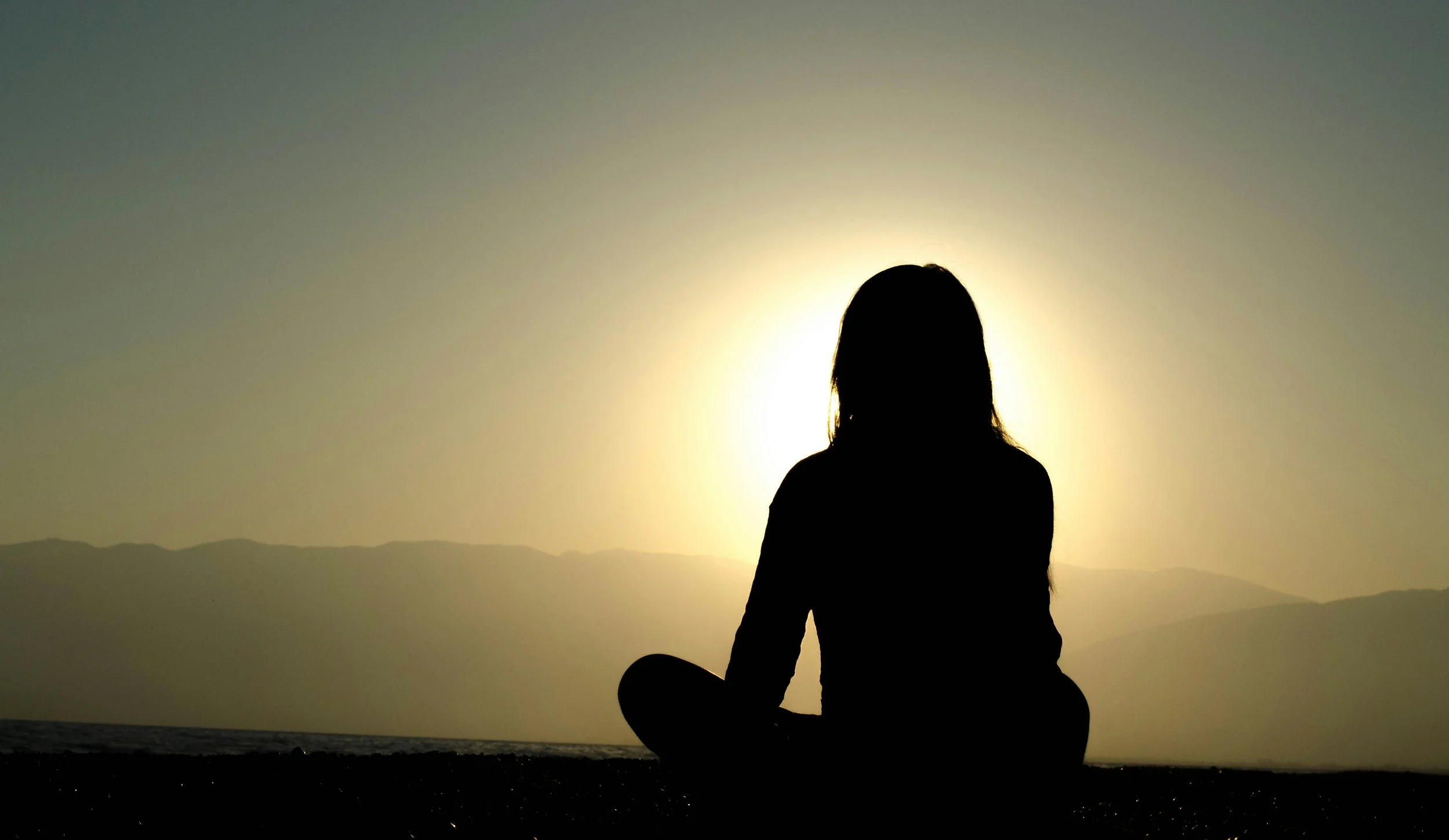
Photo by Dingzeyu Li on Unsplash
What Meditation IS
Meditation is quite simply becoming familiar with yourself. It is like looking into a special kind of mirror that reveals more than just physical features. During meditation we learn about our thoughts, emotions, sensations, tendencies, habits, behaviors and more. We become intimate with the inside features of what make us uniquely us.
If we consider the etymology (study of word origins) of meditation we might be surprised to discover its root is from the Latin “meditari” which means to think, reflect, ponder, contemplate, practice. How many of us had the notion that meditation was about stopping all thought! Interesting, right? If you’ve tried just 3 minutes of meditation, I’m certain you have said something like, “This is pointless, I can’t stop thinking!” Perhaps we can agree that it is a practice.
Another component of the word meditation is its root med- meaning “taking action toward care and healing”. This is the root found in medicine and medicate. You may have discovered the potential healing aspects of the practice if you have clocked a few hours of meditation; it doesn’t stop thinking but it does settle the mental dust and that feels like self-care.
Meditation takes many forms across traditions and cultures. Some familiar forms are prayer, chanting, contemplation, breath and awareness practices, compassion work, movement and others. While the methods may vary the intentions of practice are similar – to come to know oneself, the divine, find clarity and awaken insight and wisdom.
Meditation is an ancient wisdom practice that leads us toward a more heart-centered human experience. It does not erase life, it teaches us how to fully inhabit life.
What Meditation is NOT
If you are like many folks, you find yourself experimenting with meditation to get calm, stop thinking, navigate a personal crisis, or manage the unmanageable. Meditation is not about finding a calm escape, it’s about offering ourselves some good medicine.
I think it’s of value to name all the NOTS of meditation to avoid becoming knotted with unrealistic expectations. As previously mentioned, meditation does not stop us from thinking or bring us to a state of blissed out calm. Nor does it bypass emotions or conform to any one religion. And the act of meditating itself is not performative, selfish or something to add to your trophy cabinet of excellence – you can’t get it right or wrong.
Reality check: Here’s what often happens in meditation…
Your nose gets itchy
Your hips and back hurt
You make a grocery list
You recall the top 10 hits from 1977
You judge the crap out of the experience, declaring its useless stupidity
You fight sleep or fall asleep
You wonder how much time you have left before you can escape this torment
If you notice any of these things, congratulations! Meditation happened. Let’s just normalize that this DOES happen and if you experience this or any other mind state, well all I can say is, “you’re doing it, keep going, keep exploring, keep noticing.”
The Medicine of Meditation
There are 4 main categories of self-care impact that meditation supports once you get the hang of it and set an intention to practice daily.
1. Nervous System Regulation
2. Brain Upgrades
3. Relational Enrichments
4. Spiritual Opening
Nervous System Regulation
Each time you find a quiet place to sit and do your best to keep your attention on your feet, seat or breath (we’ll talk in more detail about this next week) you signal the nervous system that a slowing down and pausing is about to happen. That’s why in the beginning sleep seems to take over. You just gave your body the “I’m stopping now” signal and it responds with “It’s about time! I can finally recharge and rest now…thank goodness.” This is parasympathetic activation overriding the stress mechanism of sympathetic overdrive.
When we take time to rest and renew ourselves, we improve our resilience. You can’t be resilient when you’re exhausted or stressed.
Brain Upgrades
When we meditate the invitation is to bring a wandering mind back over and over again. Which could be 1000+ times in 15 minutes. This is an act of focusing your attention. Focused attention decreases worry and rumination tendencies. When we are practicing and noticing all the nonsense of the brain and the topsy turvy emotion loops running on repeat without acting out on any of them we build our capacity for emotional regulation. When we can “keep our seat” during a meditation practice in spite of it all – and there is typically a lot happening in there – we are training in equanimity – emotional balance.
Relational Enrichment
Sitting in silence with oneself is a hard thing to do. French philosopher and mathematician Blaise Pasca said it this way, “All of humanity's problems stem from man's inability to sit quietly in a room alone." When we do find the time and the courage to do so we begin to develop a relationship with ourselves. We pay attention, we are present for whatever shows up, we listen whole-heartedly to this one – because this one matters too. Developing a kind, non-judgmental, curious relationship with ourselves is the root of branching out to do the same with another. As we work inside, we radiate those benefits outside for all to benefit.
Spiritual Opening
The last category of meditation medicine is the spiritual component. Not to be confused with becoming more religious. When we devote ourselves to a consistent meditation practice, watching our inner workings, we may begin connecting in different ways; less judgmental, more loving, more patient. It is common to develop a deeper appreciation for the ordinary and mundane parts of life. We may experience insight, intuition, even wisdom bubbling up from within. And we may feel more open and spacious, able to hold more without reactivity.
Phew! That’s more than enough to chew on this week. In the next segment I will dive into the “how-tos”, various styles of meditation and common obstacles. Until then,
In-joy the medicine of meditation,
Debbie