Which Meditation Style is a Fit for You? Part 2
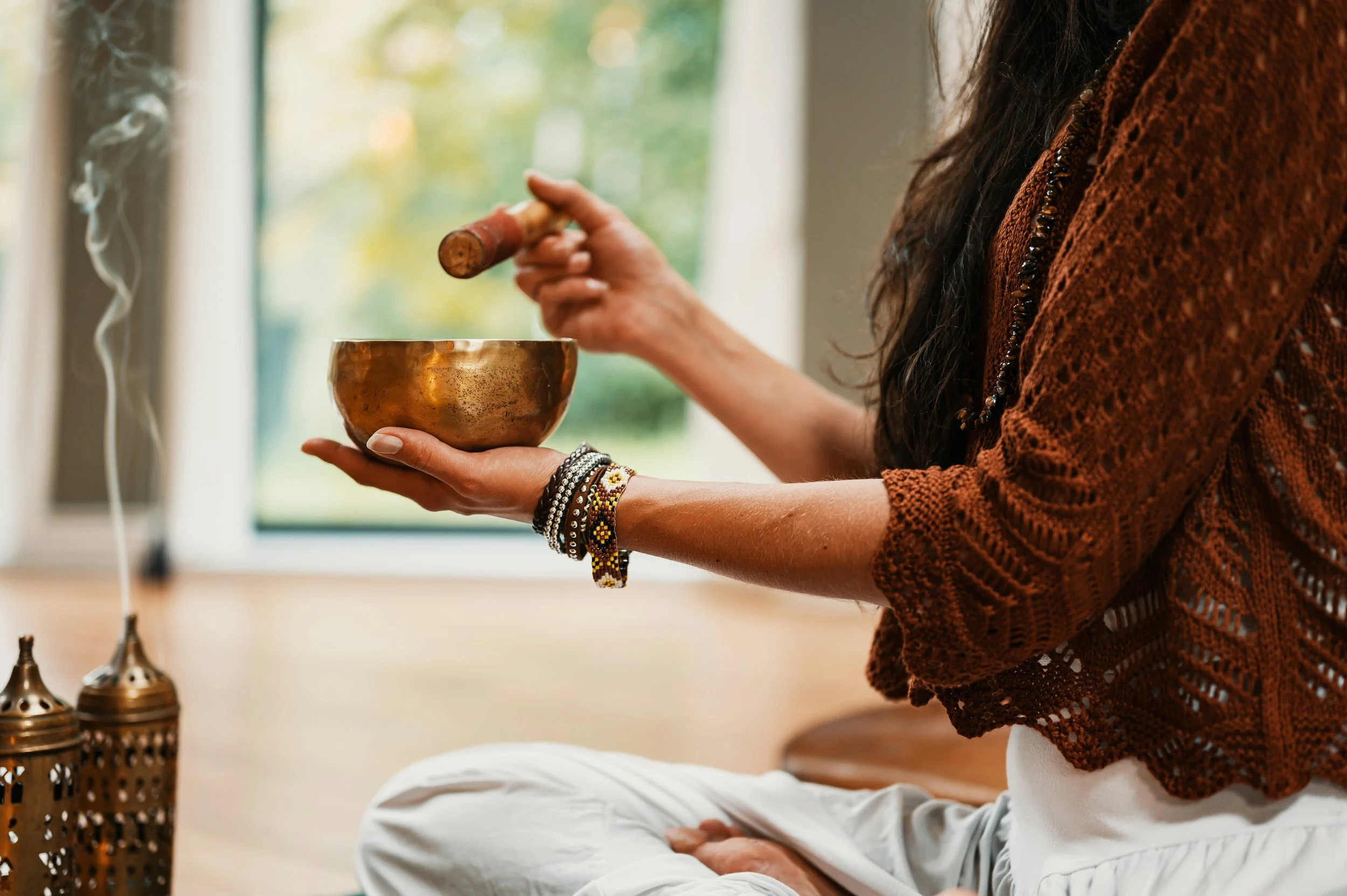
If you are new to meditation or confused by it perhaps providing an overview of the various types and styles of meditation may be a good place to start. Not every meditation style fits every person in every situation. Some practices invite stillness; others focus on awareness through movement and others develop attention or cultivate compassion. The invitation is to explore and experiment with a few to see which resonates with you and more importantly you will be inclined to practice on a regular basis.
Mindfulness Meditation
Given my educational background – a master’s degree in contemplative education from Naropa University in Boulder, Colorado – this style of meditation is my comfort zone. Mindfulness meditation is paying attention to your present moment experience while you are experiencing it. Are you interested and curious about it because it is here? Or are you wishing for a different experience?
It is a deceptively simple practice but not always an easy one.
There is the formal practice of taking a comfortable seat on a traditional meditation cushion, or chair. The body is held upright, balanced between the effort it takes to sit and the ease in which the body already knows sitting – not to0 tight, not to0 lax. Eyes can be completely closed or positioned in a soft, unfocused, downward gaze. This helps to draw attention from the outside environment to your inside landscape.
The next step is to “anchor” your attention on something in the present moment. Typically, this is the breath, but it could be the sensations of sitting, the sounds in the space, or even thoughts and emotions moving in and out of awareness.
So, sit comfortably. Let the eyes draw attention inward, anchor attention on the breath. That’s it. Simple. Until you notice almost immediately that the mind wanders. A LOT. That’s the “not easy” part, keeping attention anchored to the breath. But the real practice is noticing the mind as wandered off and to then bring it back to this sitting here, this breath moving in and out. Over and over and over again. Think reps at a gym to build physical strength. These are mental repetitions strengthening our attention, focus and are ability to relate more skillfully to our thoughts.
Walking Meditation
Ever have one of those days where sitting still is equivalent to going stir crazy. The body is filled with pent-up energy just asking to be released. There is a reason why some folks pace when they’re nervous – the rhythm of walking can be soothing while simultaneously releasing stress, worry and angst energies. Vietnamese Buddhist monk and mindfulness teacher, Thich Nhat Hahn, described walking meditation as “praying with your feet”.
Walking meditation falls within the wheelhouse of mindfulness meditation, being present in the now moment. In this practice, our attention rests on our feet, the sensations of lifting, lowering, landing, lifting again. When the mind wanders from the feet, which it most certainly will, bring it back to the sensations of the feet once again.
There are a few other nuances of walking meditation. One is intention: unlike taking a walk to get somewhere, here there is nowhere to go and nothing to accomplish. Traditionally, practitioners may choose a short path and walk it back and forth for a designated period of time. Equally beneficial is choosing a spot in nature or a labyrinth.
A second nuance is pace. Move slowly enough so that the mind has a better chance of staying present. The pace may change on any given day.
A third is posture. While eyes are not typically closed for obvious safety reasons, they are softly focused with a downward gaze. Hands may hang loosely at the sides or, more traditionally, rest with left palm up at the level of the navel to receive the right hand, palm up, within it.
This style of meditation is helpful when feeling restless. It has a grounding quality, feet repetitively meeting the earth. And for some it can also help balance an overactive nervous system.
Mantra Meditation
This form of meditation anchors the mind’s attention not through the use of breath or body sensations, but through the repitition of a word, sound or phrase. The word manta is often translated as “mind vehicle”, a tool or vehicle to quiet the mental chatter and stabilize attention.
A mantra may be repeated silently, similar to a prayer, or chanted aloud as in the call- and-response of Kirtan. Some mantra words or phrases are bestowed upon practitioners by a guru or teacher. However, this is not necessary in order to receive the benefits of this style of meditation.
A mantra may be selected based upon qualities you wish to cultivate within yourself: peace, healing, calm, wisdom, clarity or some other wholesome intention.
For many people, a mantra becomes a bridge to the divine, a way of connecting to a higher power, deeper wisdom, universal love or sacred presence, however one identifies that in their life.
Some people experience mantra meditation as sacred and transcendent, while others appreciate its calming rhythm and ability to focus the mind. Both are valid.
Visualization Meditation
Visualization begins with an intention or an image of yourself being, feeling or behaving in a particular way. There is research suggesting that training the brain through imagery can, in some cases, be nearly as valuable as physically doing the thing you wish to achieve.
Studies have shown basketball players improving free-throw accuracy through visualization paired with practice. Other studies demonstrate non-piano players mentally rehearsing a short musical piece for hours before ever touching the keys yet still showing measurable learning in the brain.
An important aspect of visualization meditation is enlisting as many of the sense gates as possible. See yourself in the environment. Feel the feelings associated with the experience. Smell the smells that might be present. Hear the sounds. In many ways, you re creating the experience in the mind and body first.
When feelings of angst arise, you might visualize yourself in a safe, peaceful location, enjoying the things you love, breathing deeply, resting contentedly. If feeling doubtful or uncertain, you may visualize the qualities you wish to strengthen, perhaps confidence, courage, resilience. If working through an illness or cancer treatment visualizing your body’s defenders going after the invaders supporting healing and restoration.
An important aspect of visualization meditation is that it engages a “bottom-up” brain process. You step into feeling the emotions and experience directly in the body rather than muscling your way there though thinking alone, a more “top-down” brain process.
An important caveat: visualization meditation is not about denying reality or engaging in toxic positivity. It is not pretending that difficulty does not exist. Rather, it is a tool to assist in creating the internal conditions that support resilience, healing and transformation.
This is not an exhaustive list, it is some of the more common and asked about. There are many more styles including breath practices, contemplative prayer, body scans, loving-kindness, Yoga Nidra and others.
Whichever style you choose is the right choice for you in this moment. The most important step is to choose a practice and practice it.
During my years as a dental hygienist, patients would often ask which floss was best: waxed, unwaxed, woven, flavored, or some new variation on the market. My answer was always the same: “The one you will actually use.”
The same holds true with meditation. No single style is inherently “better” than another. The best meditation practice is the one you are drawn to, willing to return to consistently and with curiosity.
In-joy discovering yourself through meditation.
Debbie